Guide
How to plan a ribbon cutting that photographs well
The ceremony itself lasts about ninety seconds. Almost everything that decides whether the photographs are any good happens before it starts.
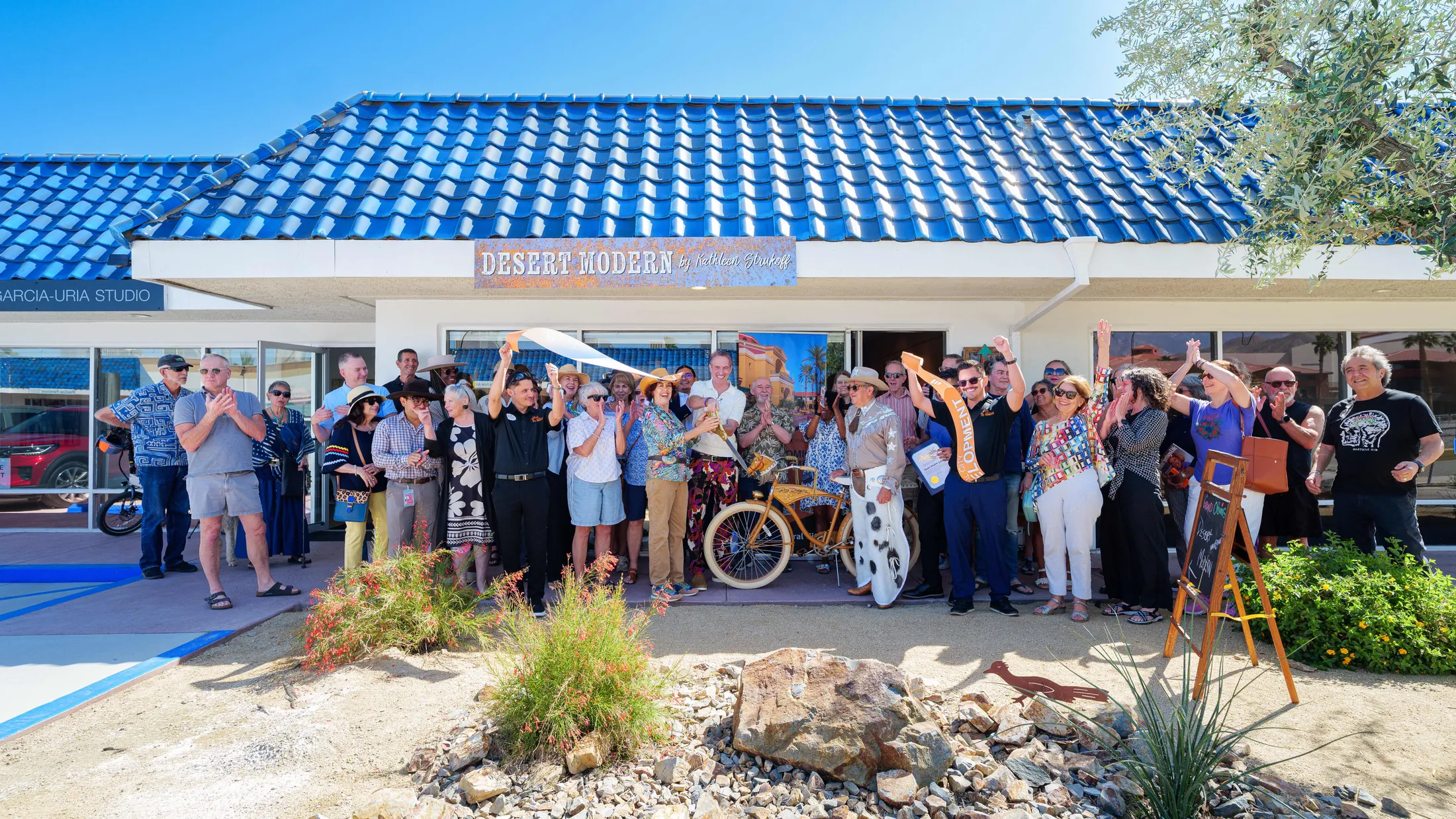
01
Where everyone stands is the whole thing
The most common ribbon cutting photograph is a line of twenty people stretched so wide that every face is tiny and the business name is hidden behind somebody's shoulder. That is a staging problem, not a photography problem, and it gets sorted before the ceremony starts.
Keep the front line to six or eight. Everyone else in a second row behind, staggered a little so faces sit in the gaps rather than directly behind heads. A shallow curve beats a straight line, because it brings the ends of the group forward and keeps everyone about the same distance from the camera.

02
Put the signage where it can actually be seen
The reason for the photograph is usually the business, and the business is usually identified by a sign that ends up completely hidden. Decide before the ceremony whether the group stands in front of the signage or beside it.
Beside it nearly always wins. In front of it means the name is behind people. Beside it means both are in the frame, and the photograph still makes sense in a year when nobody remembers which opening it was.
03
Scissors, ribbon, and the details that ruin frames
Oversized ceremonial scissors photograph far better than office scissors, and most chambers of commerce will lend you a pair. Two people holding them together is the classic frame and it works.
Hold the ribbon taut. A sagging ribbon looks sloppy in a still image in a way it never does in person. And whoever is cutting should pause with the scissors closed on the ribbon for a beat before they actually cut, because the cut itself is a fraction of a second and the anticipation frame is usually the better photograph.
- Oversized scissors, borrowed if you do not own a pair
- Ribbon pulled taut, held by two people at the ends
- Name badges off, or at least straightened
- Sunglasses off for the formal frames
- Phones down: a row of people filming makes a poor photograph
04
Think about which way the group is facing
Outside, this decides everything. A group facing straight into low morning or afternoon sun will squint through every frame and there is no fixing that afterwards. A group with the sun directly behind them turns into silhouettes against a blown out sky.
The answer is usually to angle the group so the light comes across them rather than at them, and I will suggest that on the day. But if the time is still movable, mid morning or the hour before sunset is far kinder than noon.
05
The shot everybody forgets
The clean interior. Half an hour before guests arrive, while the space is finished but untouched. Shelves stocked, chairs straight, floor clean, nobody in frame.
That is the photograph the business uses for the next three years on the website, the Google profile and every social account. The ceremony photo gets used once, in a press release. If you only protect one thing in the schedule, protect that half hour.

06
What a ribbon cutting costs
A ribbon cutting is a flat $200 with the photographs delivered the next business day. Most of them run thirty minutes to an hour.
It has its own rate because it does not fit a normal event booking. The shot list is short and predictable, and the business wants the images out while the opening is still news. Charging a two hour minimum and quoting three to five days made no sense for either of us.
That covers arrival and setup, the clean interior before guests, the ceremony, the group combinations afterwards, and some candid coverage of the reception. If you want longer than that, standard event rates pick up from there.
07
Build in five minutes of grip-and-grin
After the cut, while the group is still together, take five minutes for the combinations people will ask for later. Owners on their own, owners with the mayor or the chamber president, the staff team, the family.
It costs almost nothing while everyone is still standing there, and it is close to impossible to recreate once they have scattered into the room.
Send me the layout a few days ahead and I will flag anything that is going to cause trouble while there is still time to move it.
- Steven
Questions
How to plan a ribbon cutting that photographs well: common questions
How long should I book for a ribbon cutting?
Most ribbon cuttings run 30 minutes to an hour, and they have their own flat rate of $200 with next business day delivery. A grand opening is usually bigger, 1 to 2 hours, and is booked at the standard hourly rate. That covers arrival and setup, the clean interior before guests, the ceremony, the group shots after, and some candid coverage. If you want longer, standard event rates apply from there.
Who should hold the scissors?
Usually the owner, often with the chamber president or a local official. Two people is the strongest frame. More than two and the scissors get lost.
What time of day is best?
Mid-morning is the usual answer for a business opening, and it is also the kindest light outdoors. Avoid scheduling an outdoor ceremony for the middle of the day between June and September.
Should we do the ceremony inside or outside?
Outside, if the entrance and signage are worth showing and the weather allows, since that is where the sense of place is. Indoors is the safer choice on a windy day or in high summer.
What areas do you cover?
The whole Coachella Valley. I shoot regularly in Palm Springs, Palm Desert, La Quinta, Rancho Mirage, Indio, Cathedral City, and Desert Hot Springs, and I am happy to travel anywhere in the valley at no extra charge. There is a page for each city and service below with the details for that area.
- Real Estate in Palm Springs
- Real Estate in Palm Desert
- Real Estate in La Quinta
- Real Estate in Rancho Mirage
- Real Estate in Indio
- Real Estate in Cathedral City
- Real Estate in Desert Hot Springs
- Events in Palm Springs
- Events in Palm Desert
- Events in La Quinta
- Events in Rancho Mirage
- Events in Indio
- Events in Cathedral City
- Events in Desert Hot Springs
- Headshots in Palm Springs
- Headshots in Palm Desert
- Headshots in La Quinta
- Headshots in Rancho Mirage
- Headshots in Indio
- Headshots in Cathedral City
Ready when you are
Ten years of shoots across the Coachella Valley. If you would rather talk it through than read another list, that works too.
Check event availabilityKeep reading
- Why hire a photographer for your ribbon cuttingThe ceremony lasts about ninety seconds. What you do with the photographs afterwards is what actually decides whether hiring somebody was worth it.
- How many hours of event photography do you need?Booking too few hours is the thing I see go wrong most often. The part that gets cut is almost always the part you wanted, so here is how to work out the number before you book.
Let's plan your shoot
Let's get your shoot started.
Pick what you need photographed and add your name and email. That is all I need to reply, usually within one business day.